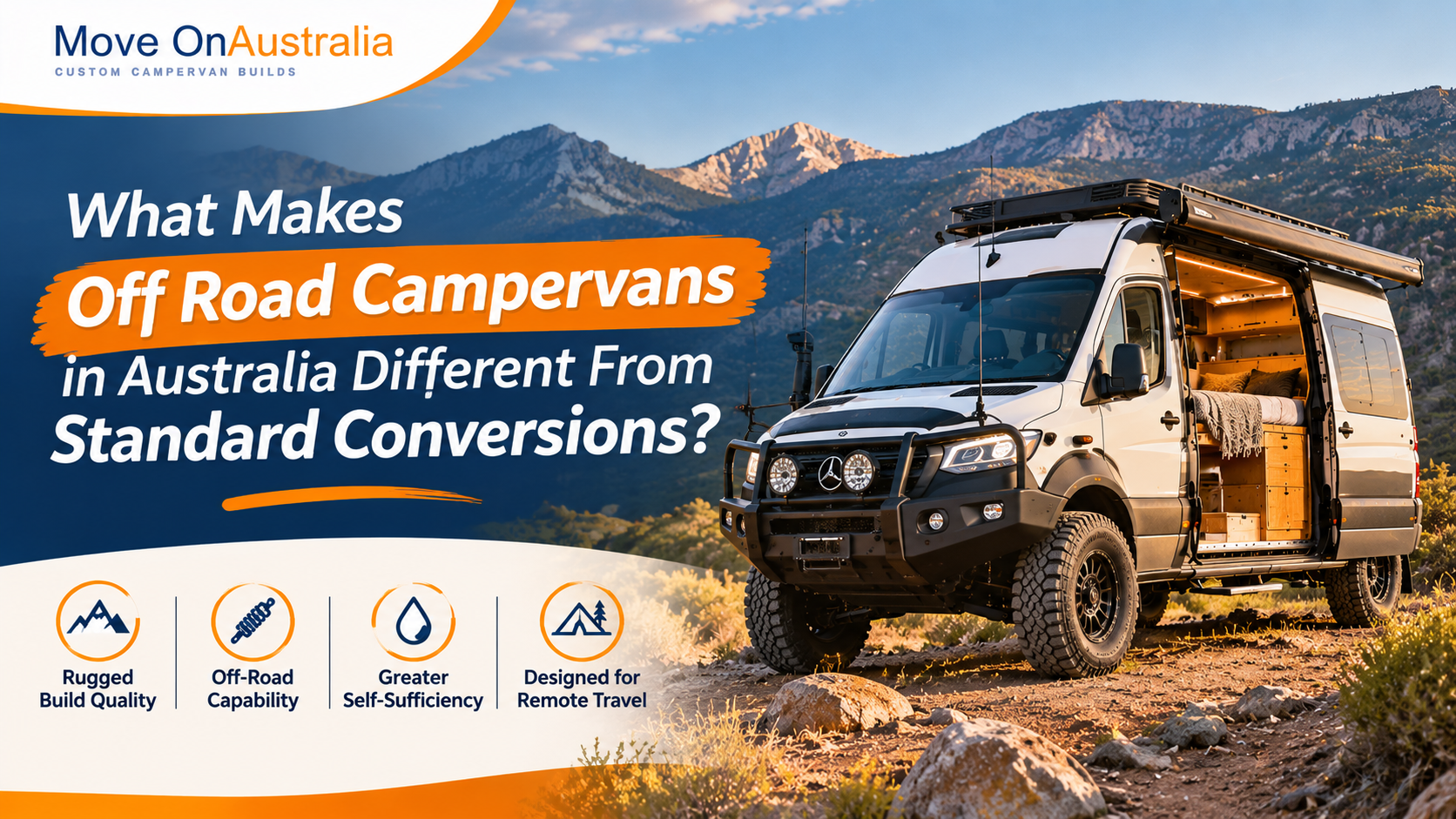
Plenty of vans look the part. Lifted stance, roof rack, all-terrain tyres. But when you’re 200 kilometres from the nearest town on a corrugated track, the difference between a standard conversion and a properly built off-road one stops being cosmetic.
If you’re researching off road campervans Australia buyers can order, or comparing custom campervan builders, here’s what actually separates an adventure-ready build from a standard fit-out.
1. The Base Vehicle and Drivetrain
A standard conversion is usually built for sealed roads, caravan parks and national park campgrounds. It can handle the odd gravel road, but it isn’t engineered for sustained rough terrain.
An off-road build starts with a more capable platform:
- 4WD or AWD drivetrain for sand, mud, steep tracks and creek crossings
- Higher ground clearance to clear rocks, ruts and washouts
- Robust engine and cooling setups for long, hot, remote driving
Many buyers look at a Mercedes campervan Australia offers in 4×4 form, while others prefer purpose-built 4WD platforms. The right choice depends on your route, budget and how remote you plan to go. A good builder will talk you through the trade-offs before you buy the vehicle, not after.
2. Suspension Built for Corrugations
Suspension is the biggest functional difference. Standard vans are tuned for comfort on bitumen. Off-road builds need suspension that copes with weight, vibration and constant impact.
Common upgrades include:
- Lifted or heavy-duty springs matched to the fitted weight of the van
- Upgraded shock absorbers designed for corrugations and rough tracks
- Airbags or load-assist systems to manage payload changes
- Reinforced mounting points so the fit-out isn’t shaken apart
This matters inside the van too. Corrugated roads punish cabinetry, plumbing and electrical connections. A well-built overlander campervan is designed so everything inside stays tight, quiet and working after thousands of kilometres of rough road.
3. Tyres, Wheels and Recovery Gear
Tyres are one of the most important off-road decisions. Standard conversions often run road-biased tyres. Off-road builds typically use:
- All-terrain or more aggressive tyres with stronger sidewalls
- A full-size spare, mounted securely
- Recovery points rated for safe vehicle recovery
- Space for recovery gear such as traction boards, a compressor and a puncture repair kit
Ask your builder where recovery gear lives. In a thoughtfully designed van, it’s accessible without unpacking your whole kitchen.
4. Bigger Power Systems for Real Off-Grid Use
The further you go from powered sites, the more your electrical system matters. A standard weekend conversion might run well on a 100Ah lithium battery. Remote travel asks a lot more.
Typical off-road builds include:
- 200–400Ah lithium battery capacity, sized around your appliances
- Larger solar arrays to recharge in all conditions
- DC-DC charging so driving tops up your batteries
- A properly sized inverter for laptops, cameras and cooking appliances
At Move On Australia, for example, The Overlander is built around a 300Ah lithium system as a starting point, with options to go further. The goal is simple: you shouldn’t have to ration power when you’re far from help.
5. Water Capacity and Filtration
Remote travel means water becomes a limited resource. Standard conversions might carry enough for a weekend away. Off-road builds plan for days or weeks between refills.
Look for:
- Larger fresh water tanks with sensible placement and weight distribution
- Filtration so you can top up from varied sources
- Efficient taps and a well-planned hot water system
- Grey water capacity that suits your travel style
Good design also keeps heavy water tanks low and central, which helps the van handle better on rough tracks.
6. Weight, Payload and Compliance
This is the area people often underestimate. Every fitting adds weight: batteries, water, cabinetry, a fridge, roof gear, recovery equipment. Standard conversions can get away with less planning, but off-road vehicles need careful weight management.
A professional build considers:
- Payload (how much weight the vehicle can legally carry)
- Weight distribution for safe handling
- Compliance requirements for modifications such as suspension and structural changes
Rules can vary by state, and modifications often need engineering and approval. This is where professional campervan conversions stand apart. A reputable builder understands the compliance side and handles certification rather than leaving you to sort it out later.
7. Structural Strength and Fit-Out Quality
Rough roads put huge stress on everything inside a van. A standard fit-out may use lighter joinery and fixings that are fine for smooth roads. Off-road builds need a more rugged approach:
- Securely mounted cabinetry with robust fixings
- Reinforced bed frames and storage compartments
- Latching drawers and doors so nothing flies open on rough tracks
- Protected wiring and plumbing runs to prevent chafing and leaks
This is one of the most important questions to ask when comparing builders. Ask how they test and reinforce their builds, and look at campervan builders reviews from owners who’ve actually taken their vans off the bitumen.
8. Dust, Water and Heat Management
Australian off-road travel means dust, heat and the occasional deep puddle. Standard conversions aren’t always designed for this. Off-road builds often include:
- Sealing and dust-resistant design around doors, vents and storage
- Insulation that handles extremes, from hot outback days to cold desert nights
- Ventilation and airflow that keeps the cabin comfortable without letting dust in
- Protected underbody components such as tanks and wiring
These details matter far more on a remote trip than a campground weekend.
Standard vs. Off-Road: Quick Comparison
| Standard conversion | Off-road conversion | |
|---|---|---|
| Typical use | Highways, caravan parks, weekend trips | Remote tracks, outback, extended travel |
| Drivetrain | 2WD | 4WD/AWD |
| Suspension | Standard | Upgraded and matched to load |
| Tyres | Road-oriented | All-terrain, full-size spare |
| Battery capacity | Often 100–200Ah | Often 300Ah or more |
| Water capacity | Short-trip focused | Larger, built for remote stays |
| Fit-out build | Standard fixings | Reinforced for corrugations |
| Build time | Shorter | Longer and more involved |
Do You Actually Need an Off-Road Build?
Honest answer: not everyone does. If you mostly travel on sealed roads and stay at campgrounds, a well-designed standard conversion will serve you well and cost less. A Weekend-style build or a Nomad is often the sensible choice for full-time living in a van on the main touring routes.
But if your plans include Cape York, the Kimberley, the Simpson Desert or the High Country tracks, a purpose-built off-road van is worth the investment. It’s safer, more reliable and far more comfortable when things get rugged.
What to Ask Before You Commit
When comparing custom campervans Australia builders offer, ask:
- What platform do you recommend for my route, and why?
- How is the suspension matched to the finished weight?
- How do you secure cabinetry and plumbing for rough roads?
- What battery, solar and water capacity suits remote travel?
- How do you handle compliance and engineering approval?
- Can I see a completed off-road build, or speak to an owner?
A confident, experienced builder will answer these clearly.
Build the Off-Road Campervan That Fits Your Adventures
At Move On Australia, our Overlander is designed for travellers who want to go beyond the bitumen. Starting from $65,000 with a typical 14–18 week build, it combines 4WD capability, a 300Ah lithium system and an off-grid water setup, and every detail is customised to your route and lifestyle. Our team has completed over 600 builds in more than 16 years, so we know what holds up when the road gets tough.
Ready to plan your off-road build? Start your build or call 0423 982 216 for an honest chat about where you want to go.