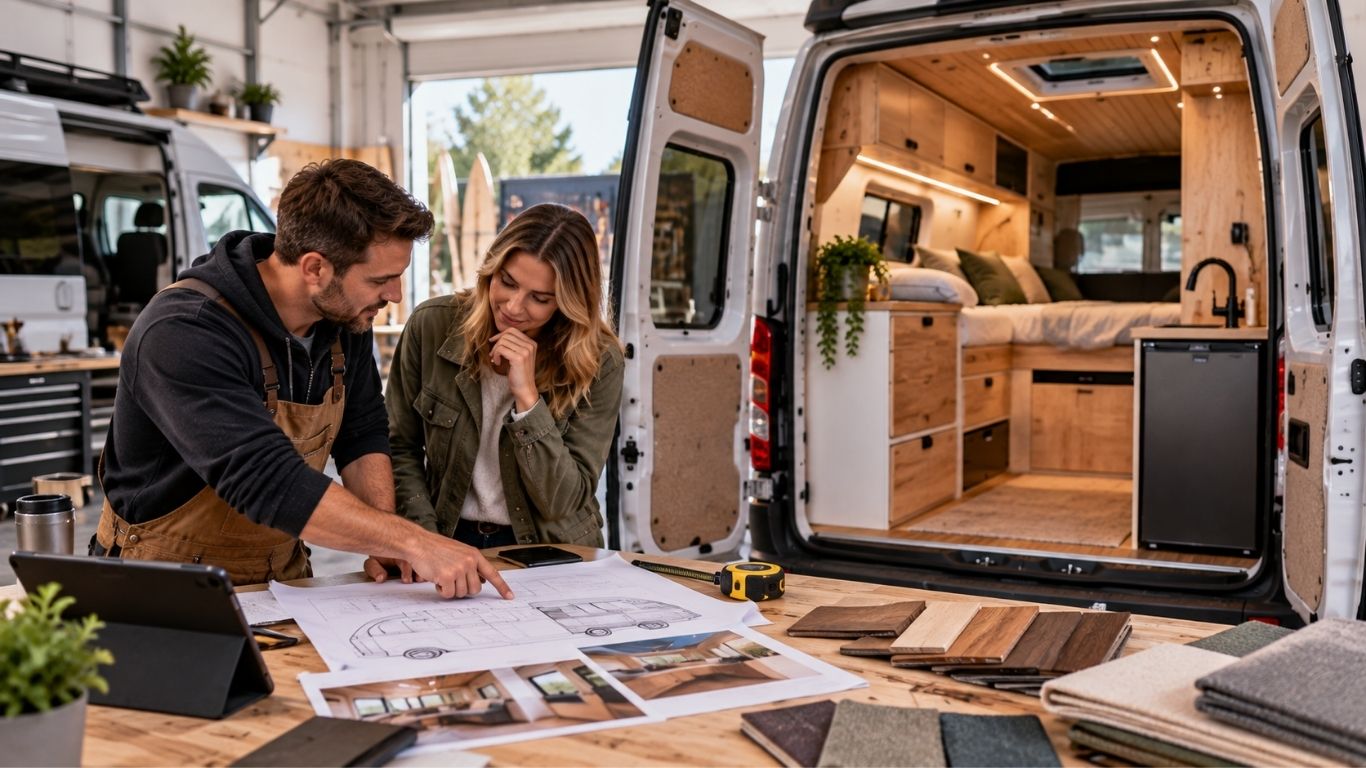
Scroll through enough vanlife content on Instagram and you’ll notice a pattern: every van looks like it came from the same mould. Plywood walls, a fold-out bed, a two-burner stove wedged into a corner. It’s not a bad setup — but it’s not yours either. That’s the real difference between a generic conversion and a bespoke campervan conversion: one follows a template, the other is built around how you actually live.
We’ve spent 16 years and 600+ builds at Move On Australia figuring out what “bespoke” really means in practice. It’s a lot more specific than most people expect.
Bespoke Isn’t a Marketing Word — It’s a Design Process
Plenty of companies slap “custom” on their website while offering three fixed layouts and a colour swatch. Genuine bespoke work starts before a single panel is cut, with a conversation rather than a brochure.
When someone comes to us wanting a custom campervan conversion, we ask questions first. Do you work remotely and need a proper desk? Are you travelling with a dog or kids? Do you need a full shower and toilet, or just enough water for weekend trips? Is this a home for six weekends a year, or is this full-time living in a van for the next three years?
Those answers change everything. The layout, the power system, the water capacity, even the choice of base vehicle all follow from them. A bespoke build reverse-engineers the van from your life, not the other way around.
The Three Pillars of a Genuinely Custom Build
After hundreds of builds, we’ve found “bespoke” really comes down to three things.
1. A layout that starts from a blank page.
Most factory conversions and budget builders work from a fixed floor plan, since it’s faster and cheaper to repeat. A true custom build starts with a 3D layout drawn around your specifications — bed position, kitchen size, storage zones, work area — and you approve every detail before any cutting begins. Want bunk beds for the kids instead of a queen bed? Prefer the kitchen on the driver’s side instead of the standard layout? That’s the entire point of starting from scratch.
2. Systems sized to how you’ll actually use the van.
A weekend camper doesn’t need the same electrical setup as someone living off-grid full-time. Bespoke builders match the solar, battery, and water systems to real usage instead of defaulting to a one-size-fits-all number. Some trips only call for a modest 100Ah lithium setup. Others — full-time off-grid living, say — need 300–400Ah with MPPT solar and shore power. Getting this wrong is the single biggest regret we hear from people who went the cheap conversion route: they either paid for capacity they never use, or ran out of power on day three.
3. Materials and finishes chosen, not defaulted to.
This is where “custom” becomes visible. Timber cladding versus painted ply. Stone benchtops versus laminate. Vinyl wrap versus exposed panelling. None of these choices affect whether the van runs, but they decide whether it feels like a considered space or a converted delivery vehicle. Bespoke conversions treat finish selection as part of the design brief, not an afterthought.
What a Bespoke Build Process Actually Looks Like
Weighing up custom campervan builders in Australia? Here’s roughly what a proper bespoke process should include, based on how we run ours:
- Design consultation — in person or via video, mapping out how you live and what the van needs to do for you.
- 3D layout and full spec sheet — a complete visual and technical plan you sign off before work starts.
- A build window that reflects complexity — a simple weekend van might take 6–8 weeks, while a full off-grid, full-time setup can run 10–18 weeks. Anyone quoting the same turnaround for every build probably isn’t doing bespoke work.
- Regular updates during the build — photos, a mid-build walkthrough, and the chance to make changes before anything locks in.
- A proper handover — someone walks you through every electrical, plumbing, and gas system until you’re confident using it, not just handed a set of keys.
Bespoke vs. Off-the-Shelf: Why It Matters Long-Term
The gap between a bespoke campervan conversion and a factory or DIY build rarely shows up on day one. It shows up six months in — in the extra power capacity that stops you rationing the fridge, in the desk that was actually planned for rather than bolted on, in the layout that still makes sense once the novelty wears off and you’re just trying to cook dinner in the rain.
Luxury campervan conversions get this right by treating comfort and reliability as part of the same brief. A self-contained shower and toilet, insulation rated for Australian conditions, hot water that doesn’t rely on stopping at a caravan park — none of it happens by accident. It’s specified from the start.
Getting Started
Comparing custom campervan builders comes down to a few simple questions. Do they design around your life or theirs? Do they size the systems to your actual usage? Are the finishes a genuine choice, or a default you’ll be stuck with?
Every build at Move On Australia — from The Weekend through to The Overlander — starts as a conversation about how you want to live on the road. Each one is backed by a 3-year structural warranty and a build process you can walk through in person at our Port Melbourne workshop.Melbourne workshop.